


Layer 8 Secured via Human Threat Exposure Management
A unified, AI-driven platform that continuously detects, simulates, scores, and reduces human risk across your enterprise.
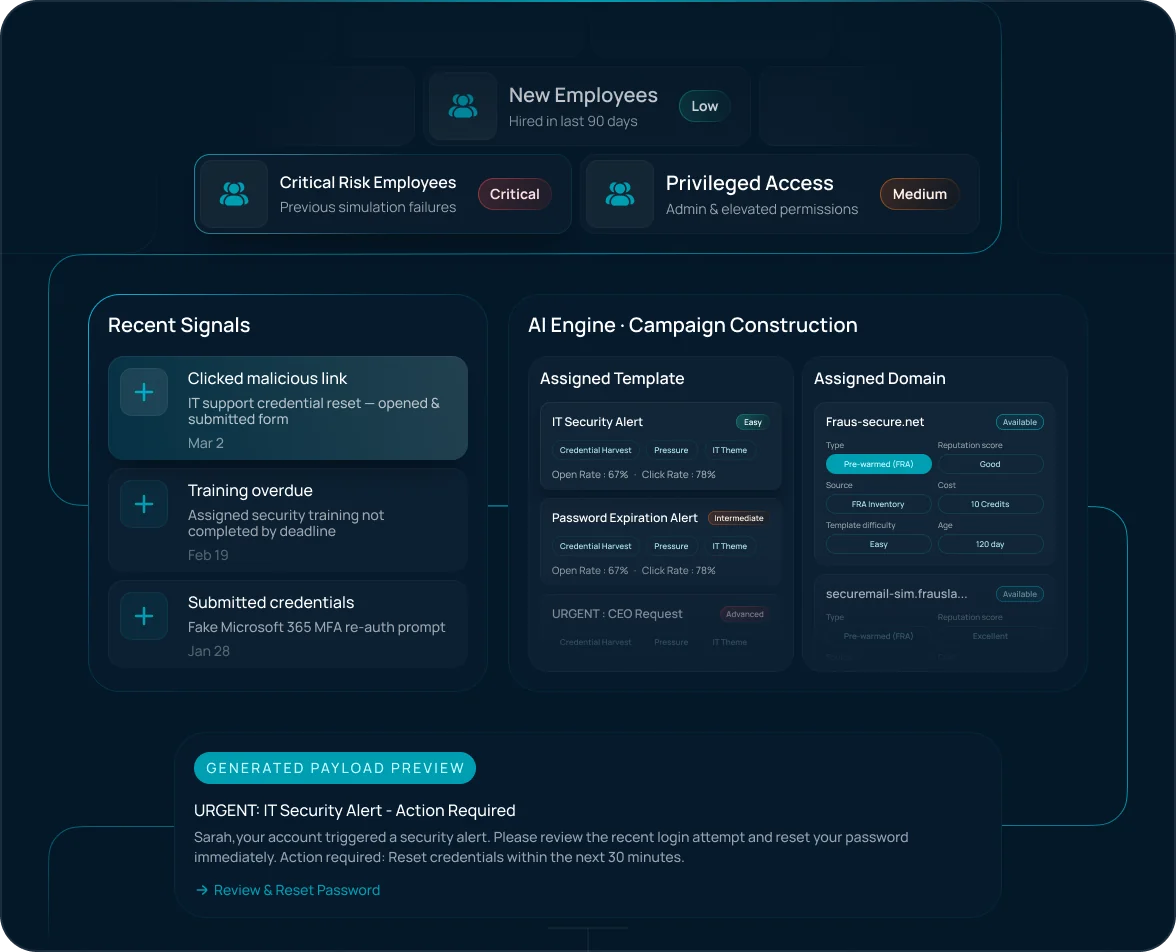
Adaptive Social Engineering Engine
Agentic AI-Driven phishing scenarios that adapt per risk-level, per real-world context, incorporating MFA bypass techniques.
- QR phishing, MFA bypass and credential harvesting scenarios
- Lures built from OSINT and your business context
- Tone and difficulty adapt to each user's role and behavior
- Fully agentic or admin-led campaign control

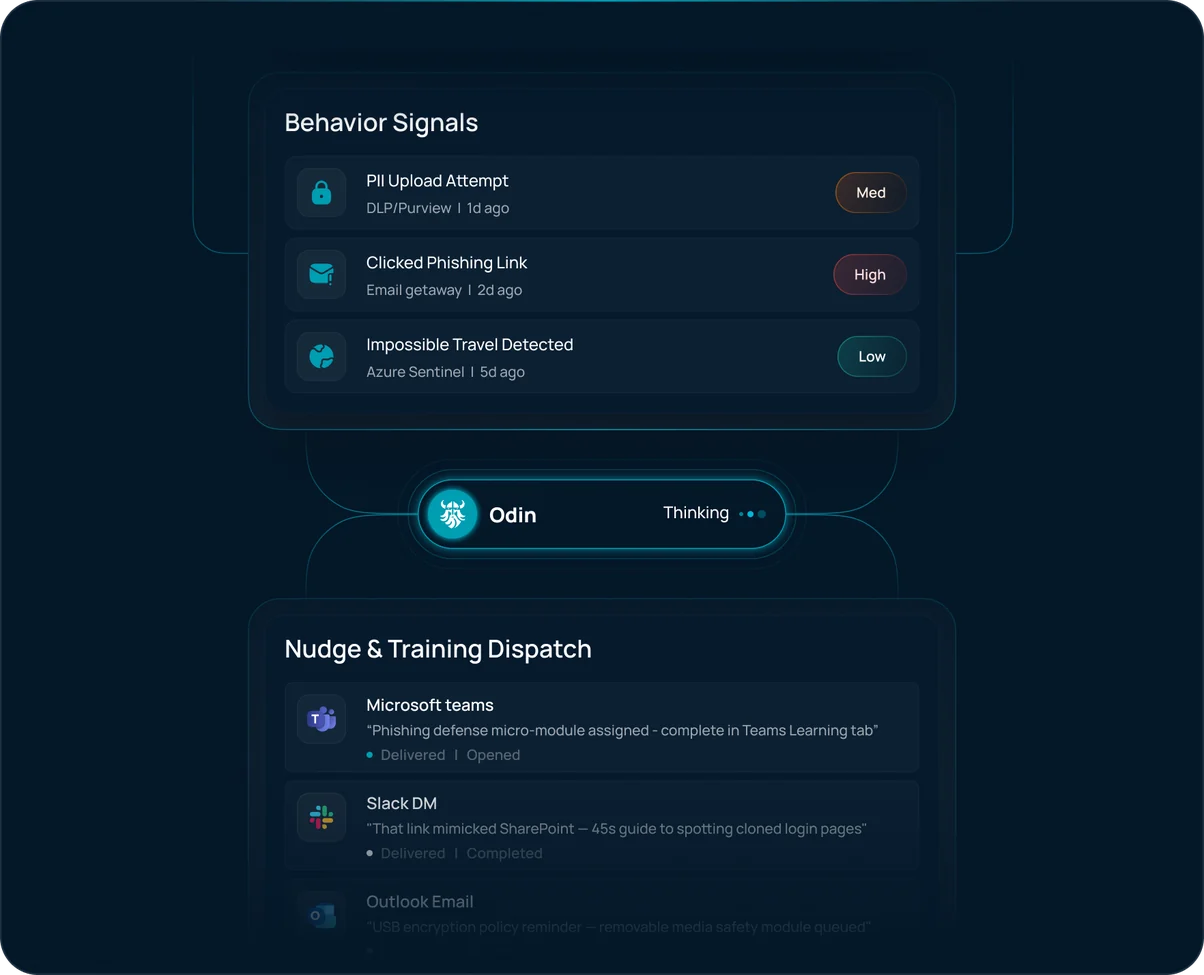
Zero-Touch Risk Remediation
Automated mitigation through contextual training, policy enforcement, and adaptive controls.
- Training assigned automatically when risky behavior appears
- Policies sent for acknowledgement and tracked
- Role-based micro-learning for every user
- Lessons delivered inside Microsoft Teams
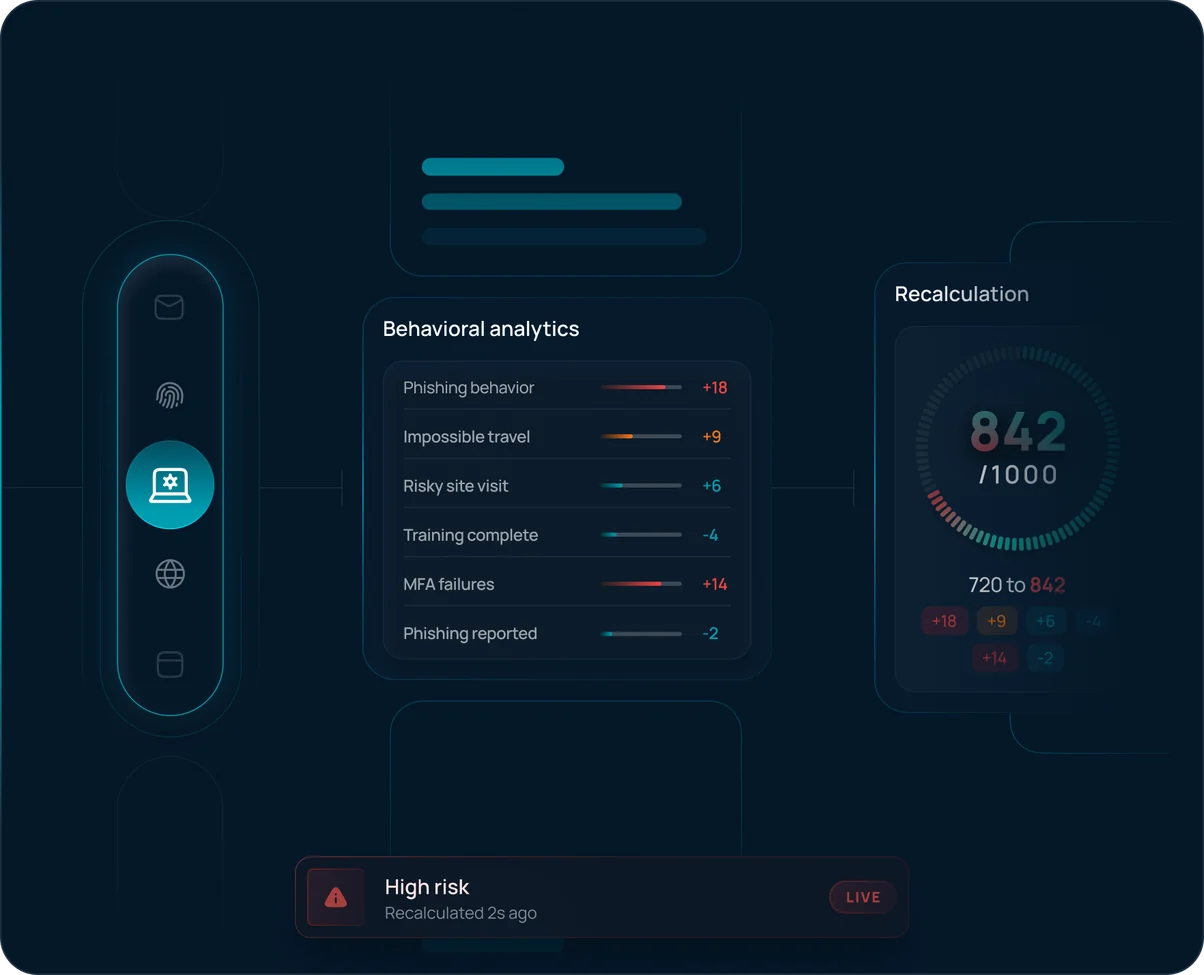
Dynamic Human Risk Modeling
Continuously recalculates user risk scores based on evolving behavior, user criticality, role, privileges, exposure patterns, and many other real-time security signals.
- Risk scores recalculated as new signals arrive
- Weighted by role, seniority and criticality
- A risk grade and category for every user
- Recurring exposure patterns surfaced over time
Multi-Tenant and MSSP Ready
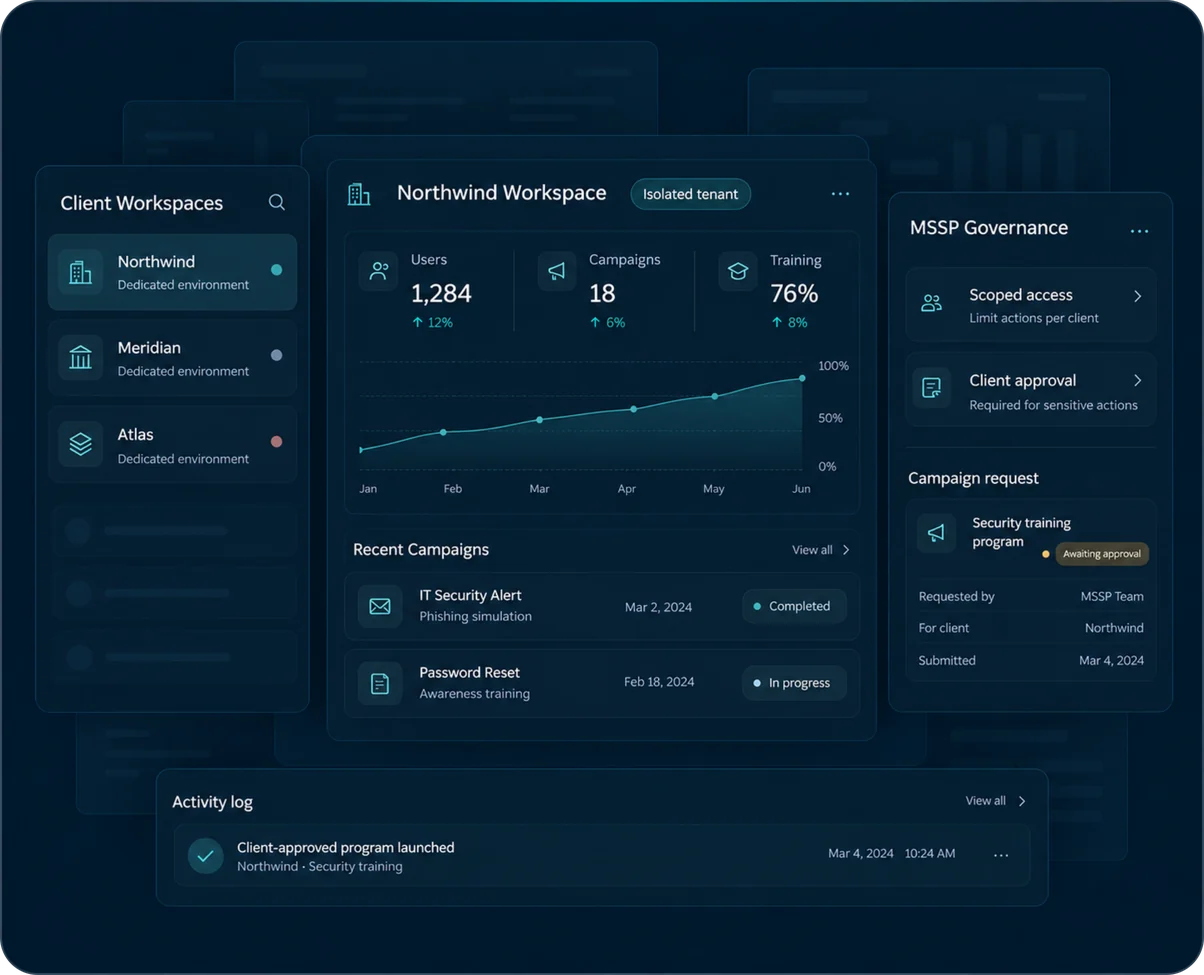
Run Fraus for one organization or many. Multi-tenant deployments give each client or entity its own environment, and MSSP governance and approval workflows let service providers run human risk programs on their clients' behalf.
- A separate tenant for every client or entity
- Client approval workflows for automation rules
- An audit trail in every tenant
- Role-based access and enterprise SSO
Ecosystem-Native Intelligence
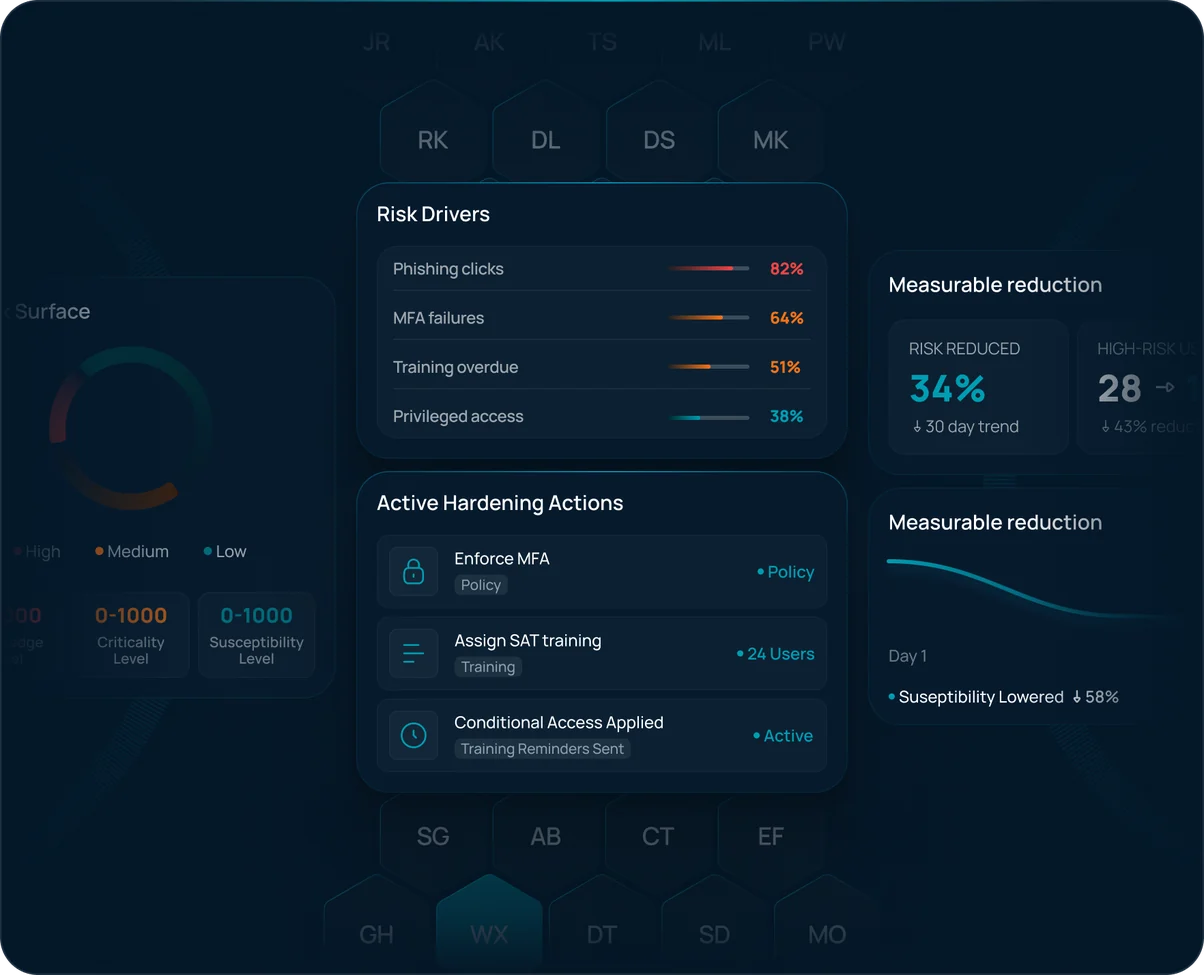
Automatically reduces human risk by identifying vulnerable users and applying targeted controls, training, and access restrictions to minimize real-world attack exposure.
- Signals from your existing security tools in one view
- Risk rolled up by team, department and business unit
- Stakeholders notified automatically about high-risk users
- Each user's risk trend tracked over time
Arabic-Supported Sovereign Deployment
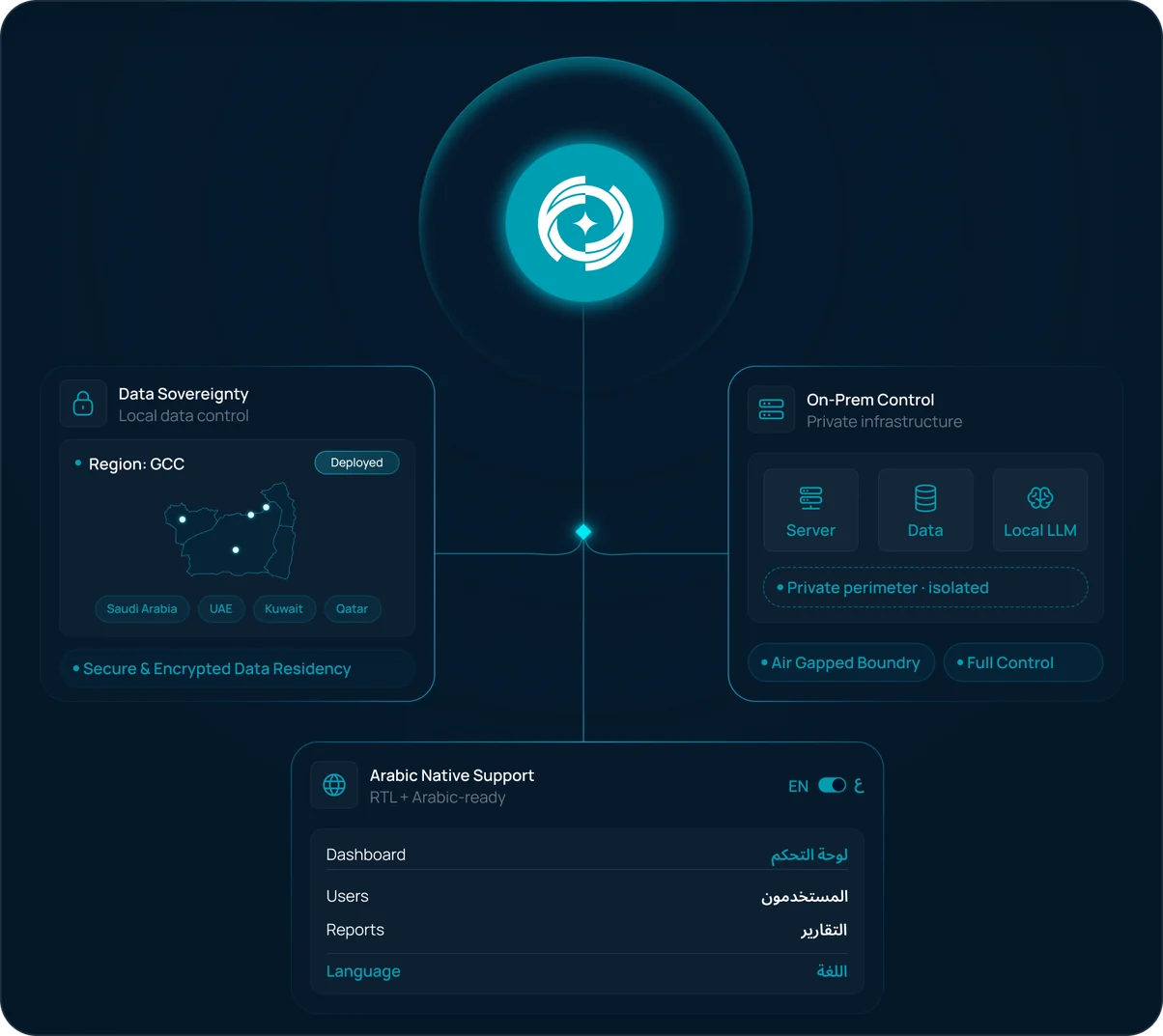
Designed for GCC organizations that require data sovereignty, full on-premise control, and native Arabic language support.
- Platform and training in Arabic and English
- Hosted on UAE or GCC servers by default
- Fully sovereign deployment options across the GCC
- ISO/IEC 27001 certified and UAE IA compliant
50+
Integrations
Unified visibility across identity, email, cloud, collaboration, and security ecosystems.
360°
Risk Visibility
Real-time human risk intelligence with continuous behavioral monitoring and adaptive insights.
100%
Vendor-Agnostic
Designed to integrate seamlessly with any existing security stack, cloud, or infrastructure.
12+
Signal Categories
Correlating behavioral, identity, communication, and operational signals into actionable risk context.

The Era of Static Security Awareness Is Over
Continuous behavioral risk detection and autonomous intervention are replacing scheduled campaigns and static training.
Human Risk Profiling
Insights into Human Behavior for Smarter Risk Management
Behavioral Risk Measurement
A Data-Driven Approach to Evaluating Behavioral Risks
Seamless Integration
Connecting Systems Effortlessly for Better Performance

Agentic AI-Driven Phishing
Evolving Social Engineering with Autonomous AI Systems

LLM-Powered Analytics
AI-Driven Insights for Better Decision Making
Executive Dashboards
Empowering Leaders with Actionable Data
Zero-Touch Automation
Fully Automated Workflows with No Human Intervention

Continuous Risk Analytics
Ongoing Insights to Detect and Mitigate Risks Early
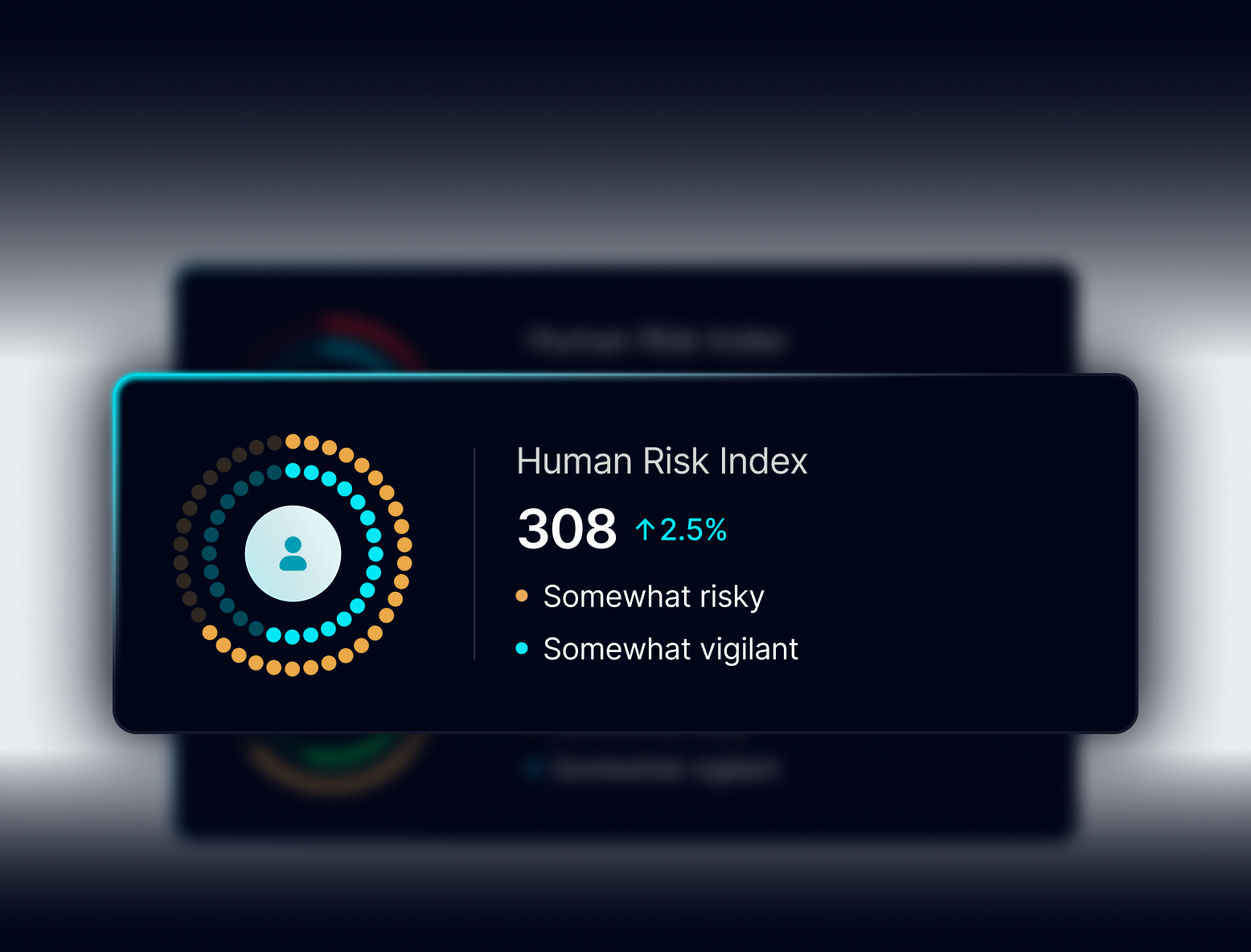
Cross-Channel Simulation
Modeling User Behavior Across Multiple Communication Channels



Everything You Need to Reduce Human Risk
Fraus utilizes autonomous AI agents that continuously learn employee behavior, predict human risk, and educate in real-time — before a breach happens.
01
Observe
Fraus utilizes autonomous AI agents that continuously learn employee behavior, predict human risk, and educate in real-time — before a breach happens.
02
Analyze
AI-driven intelligence analyzes behavioral patterns, measures exposure, and converts actions into meaningful, actionable human risk insights.
03
Respond
Fraus automatically delivers adaptive simulations and targeted microlearning to reduce human risk without manual security operations.

04
Report
Fraus delivers real-time visibility into risk trends and behavioral metrics, giving security leaders the evidence of measurable improvement.

Turn Security Signals Into Safer Human Behavior
Fraus connects to your existing security tools, identifies risky employee actions, and automatically delivers personalized guidance or training. Every signal and response continuously refines individual risk profiles, building a dynamic, organization-wide picture of human risk.
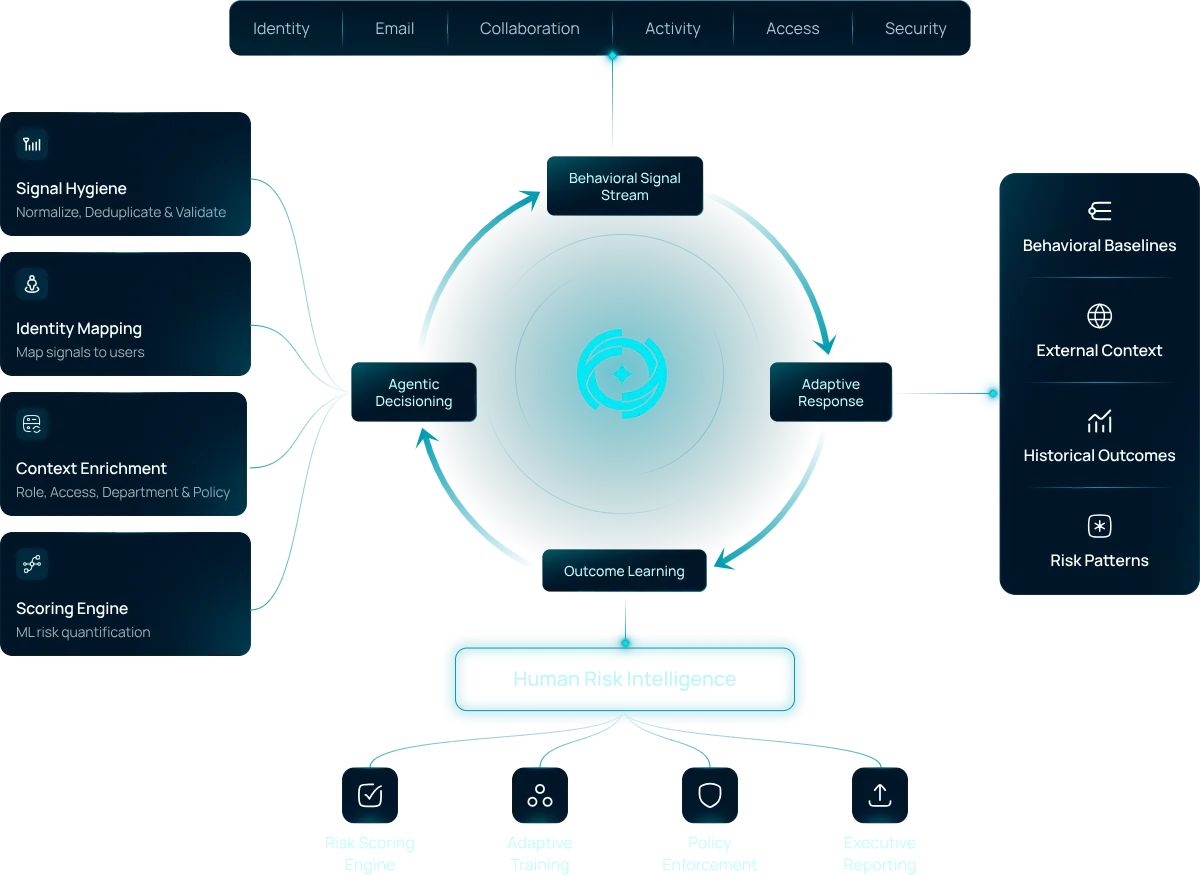
Works With the Tools Your Teams Already Use
Fraus connects to the identity, collaboration and security platforms already in place, so human risk data sits alongside the rest of the security stack.

Entra ID

Teams

Google Workspace

Microsoft 365

CrowdStrike

Sentinel
Beyond Awareness Training.
Fraus replaces the yearly campaign with risk reduction that runs on its own, adapts to each person and shows its results.
Risk reduction runs every day, between campaigns and long after them.
Fraus adapts on its own. No phishing campaigns to build by hand.
Interventions go to the people whose behaviour calls for them.
Progress shows up as fewer risk events, with numbers behind it.
Human Risk Intelligence Center
Research, analysis, and strategic insights on reducing human risk and operationalizing Layer 8 defense.

Human Attack Surface Management: Measure and Reduce Exposure
Treat people as an attack surface. See how human attack surface management maps exposure, measures it by role and reduces it in GCC organizations.
A firewall rule list shows which ports are open. Most security teams have no equivalent view of the people who hold payment approvals, admin rights or the executive inbox, yet attackers reach them by email, text and chat every day. This post is for CISOs in the UAE and GCC who want human attack surface management to work like the rest of their exposure program: an inventory, a measure and a plan to shrink it.
In short: Human attack surface management maps who attackers can reach, what each person could expose if compromised, and how they behave under attack. Measure that exposure by role, then reduce it with targeted simulations, just-in-time coaching and controls instead of one annual course.
What the Human Attack Surface Includes
NIST defines an attack surface as the set of points on the boundary of a system where an attacker can try to enter, affect it or extract data. People sit on that boundary. A mailbox, a phone number, a Teams account and an approval right are all points an attacker can try.
Reach. Every employee with a public email address, a listed phone number or a LinkedIn profile can be contacted. Reach is wider than most teams assume, because it also covers text messages, voice calls and chat, not only email.
Privilege. Reach matters most when it connects to something valuable. A finance officer who releases payments, an IT administrator and an executive assistant who manages a calendar and a mailbox for someone senior each give an attacker far more than a new starter does.
Behavior. The third part is what a person does when a lure arrives: click, enter a code, approve a prompt, or report it. This is the part that changes over time, which is why a static list of roles is only the starting point.
Human Attack Surface Management Step by Step
With those three parts in view, the work looks like any other exposure program. You build an inventory, rank it, act on the top of the list and measure again. The difference is that the assets are people, so the method has to respect how work actually happens in each role.
- Inventory. List every employee, contractor and shared mailbox from your directory, with department, role and manager.
- Weight by privilege. Mark who can move money, change access, handle sensitive data or speak for the organization.
- Observe behavior. Collect simulation results, reporting, training activity and identity or endpoint events per person.
- Act on the highest exposure first. Assign the right simulation, lesson or control to the people where reach, privilege and behavior meet.
- Re-measure. Compare exposure after each change, per role, not only across the whole company.
Steps one and two are a one-time effort that you refresh when people join, move or leave. Steps three to five repeat continuously, which is where most programs stall, because someone has to read the data and decide what happens next.
Measuring Human Exposure by Role
The case for measuring people is well supported. The 2026 Verizon Data Breach Investigations Report found the human element present in 62% of breaches. Vulnerability exploitation is now the most common way in, starting 31% of breaches, yet people are still involved in most of them.
A figure like that is useful for the board, but it cannot tell you where to start. For that you need exposure per person, rolled up by role and department, with the three inputs from earlier: how reachable the person is, how much they can access and how they behave. Our posts on the human risk score and the human risk assessment method cover how to build those inputs.
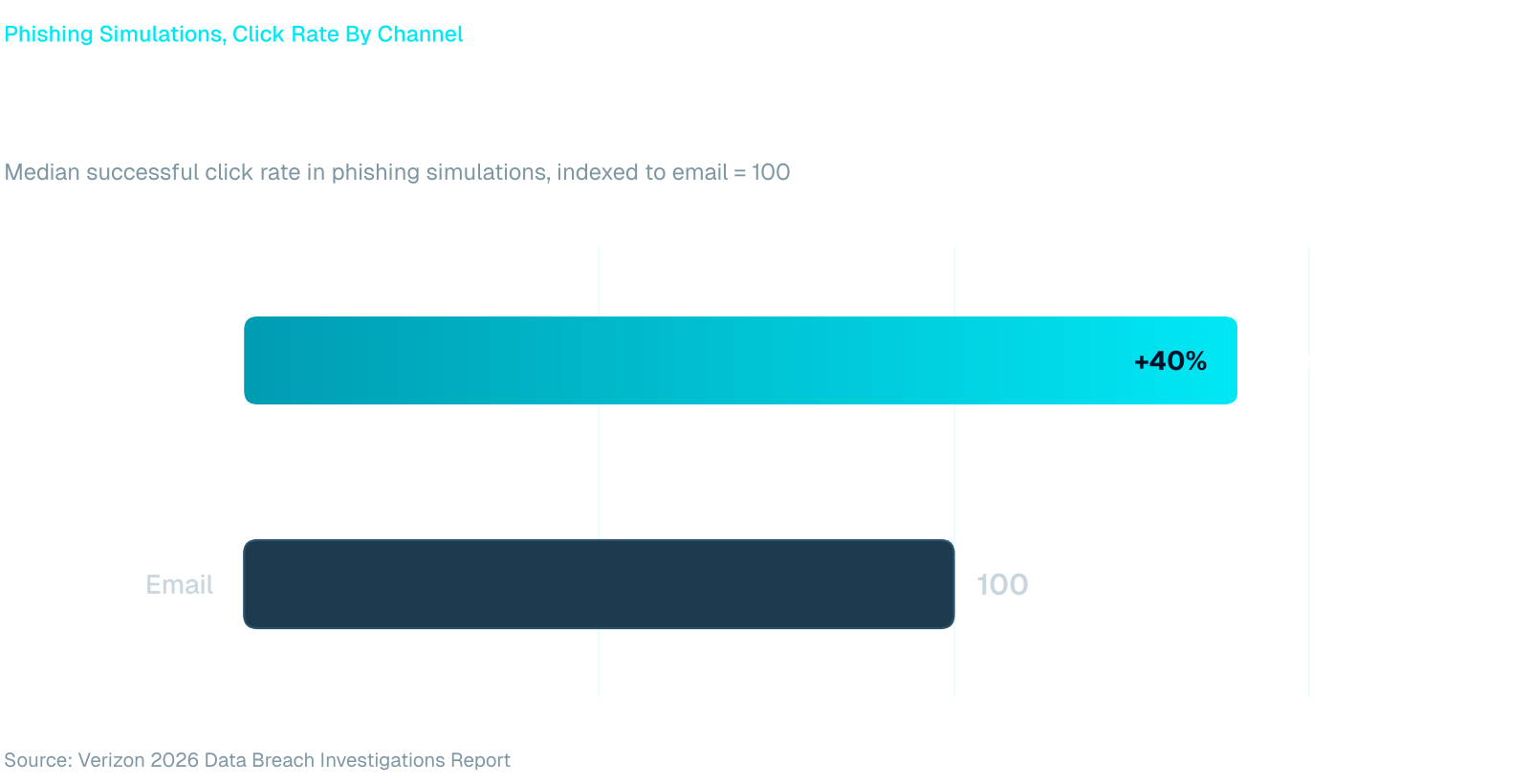
What belongs in an exposure view is the channel as well as the person. The same report found that in phishing simulations, the median rate of successful clicks over mobile vectors such as voice and text was 40% higher than over email. A person who handles email well may still be exposed on the phone, which is why smishing and vishing practice belong in the same measurement.
New channels add exposure too. Verizon also reports that regular use of AI tools among employees rose from 15% to 45% in a year. Each unsanctioned tool is another place where data can leave, which we cover in Shadow AI risks.
What to report. Give leadership exposure by role group, the reporting rate and time to report next to the click rate, and repeat behavior over time. Those show whether exposure is falling where it matters, rather than whether a course was completed.
Reducing Exposure Without Adding Workload
Once exposure is ranked, the aim is to remove it from the top down. In practice that means each person gets what their own profile calls for. Odin scores risk continuously per employee, weights it by role criticality and escalates automatically, so the highest-exposure people surface without a manual review.
Simulation is the next lever. Graybait runs a campaign-less phishing program through agentic AI, choosing each person's next simulation from their Human Risk Profile and raising difficulty as they keep spotting attacks. That suits teams that cannot plan and review campaigns for every role.
Response speed matters as much as practice. With Zero-Touch Training, a person who shows a risky behavior receives matched coaching inside Microsoft Teams straight away, which closes the gap between exposure and response.
For events that need more than a lesson, Agentic Automation Rules turn triggers such as identity, endpoint or simulation events into actions. Higher-stakes actions, such as step-up MFA or a finance approval hold, always wait for analyst approval, so people stay in control of the decisions that carry weight.
Human Exposure Management in the Wider Program
Security teams already track exposure for devices, cloud accounts and applications. Human exposure management adds people to that same picture, so one report can show where an attacker is most likely to get in, whether the entry point is a server or an employee. Human threat exposure management narrows this to the threats that are actually reaching your people, such as the lures they receive and the channels they arrive on.
This is also where the program connects to governance. The UAE Information Assurance (IA) standards include awareness and training among their controls. Exposure data lets you show that the program is aimed at the roles that carry the most risk, and our human risk management framework lays out who owns each phase.
Start With One Role Group
The opening question was how to see the people behind the ports. Pick one role group with high privilege, such as accounts payable or IT administrators, and build its inventory this week. Record who can be reached, what they can access and how they responded to the last simulation.
Set one exposure measure for that group, act on the highest-exposure people first and re-measure after 30 days. Once the group shows a clear trend, extend the same method to the next one. If you want to see how this looks inside a platform, start with Odin.
Frequently Asked Questions
What is the human attack surface?
It is every point where an attacker can reach a person and use that person to get access or data. That includes email, text, voice and chat channels, plus the privileges each person holds. It also includes behavior, because how someone responds to a lure decides whether the contact becomes a breach.
How is this different from human risk management?
Human risk management is the full discipline of scoring, training and responding. Human attack surface management is the exposure lens within it: what can be reached, what it could cost and where to reduce it first. Our guide to the framework covers the wider program.
How often should exposure be re-measured?
Continuously, since behavior and roles change all the time. A once-a-year snapshot is out of date by the next reorganization or new hire. Per-person scoring that updates from simulation results and behavioral signals keeps the view current, and a monthly review by role group is a workable rhythm for reporting.
Which roles should be mapped first?
Start with the roles that can move money, change access or handle sensitive data: finance, procurement, IT administrators, executive offices and their assistants. These combine high privilege with frequent outside contact. Our post on role-based training shows how to tailor the response by role.

Security Awareness Training Saudi Arabia: A KSA Buyer's View
A Saudi buyer's view of security awareness training: what NCA ECC asks of an awareness program, how Arabic content should work and what to measure.
Entities under the National Cybersecurity Authority's Essential Cybersecurity Controls (ECC) are assessed through self-assessment, compliance tool reports or field audits, and an awareness program is easy to describe on paper and harder to show in behavior. This post is for CISOs and awareness managers choosing security awareness training Saudi Arabia teams can defend in that assessment: what ECC asks for, how Arabic content should work and what to measure.
In short: ECC asks for an awareness program that is approved, delivered and reviewed. Buy training that works in Arabic and English, fits each role, and reports behavior such as reporting rate and repeat mistakes, not only course completion.
Security Awareness Training Saudi Arabia: What ECC Asks
ECC-2:2024 sets its awareness requirements in subdomain 1-10, Cybersecurity Awareness and Training Program. The objective is that personnel have the awareness they need, understand their cybersecurity responsibilities and have the skills to protect the entity's assets. The NCA applies the controls to government entities, their affiliated companies and private sector entities that own, operate or host critical national infrastructure, and encourages every other entity in the Kingdom to use them.
In plain terms, the 1-10 controls ask for five things:
- An awareness program that is developed, approved and delivered through multiple channels (1-10-1).
- Implementation of that approved program inside the entity (1-10-2).
- Content on the most important and latest threats, including secure handling of email and phishing, mobile devices and storage media, internet browsing and social media (1-10-3).
- Specialized skills and training for cybersecurity staff, people who develop or work on the entity's systems, and executive and supervisory positions (1-10-4).
- Periodic review of how the awareness program is implemented (1-10-5).
Words such as periodically and multiple channels are yours to define in your approved program, and the review in 1-10-5 needs evidence to look at. That evidence is where the choice of training starts to matter, and the first place it shows is language.
Arabic Content Staff Will Read and Use
ECC itself shows how the NCA treats Arabic: its disclaimer states that the Arabic version governs any question about the meaning or interpretation of the document. It would be odd for awareness training to be the one place where Arabic is an afterthought.
Arabic security awareness in Saudi Arabia runs into problems every bilingual workforce knows: lessons that read like a translation, phishing examples unlike the messages staff really receive, and reporting instructions in one language only. Ask a provider for the same lesson in Arabic and in English and judge whether the Arabic was written for Arabic readers. Our post on authored or translated Arabic training shows how to test this.
Fraus Codex delivers training in Arabic and English, and Whitebait runs phishing simulations from Arabic and English templates, so the lesson and the test can use the same language.
Measure Behavior, Not Course Completion
Completion rates tell an assessor the course was assigned, not that anyone acts differently. The 2026 Verizon Data Breach Investigations Report found the human element in 62% of the breaches it analyzed, which is why the review in 1-10-5 deserves more than a completion percentage.

Track what a person does with a suspicious message: reporting rate next to click rate, time to report, and whether the same mistake repeats. Split the results by department, role and language so a weak spot in one group shows up. Our guides to security awareness metrics and reporting rate versus click rate explain how to read each number.
Odin turns these signals into a continuous risk score for each employee, weighted for role criticality, so the periodic review can start from behavioral data instead of a survey.
Cover Roles and Respond in the Moment
Control 1-10-4 divides the workforce by responsibility: cybersecurity staff, people who build or work on the entity's systems, and executives and supervisors. One annual course cannot serve all three. Role-based learning paths give each group lessons that match what they handle, such as payment approvals for finance or privileged access for administrators.
When someone clicks a simulated lure, the useful moment is that minute, not next quarter's course. Zero-Touch Training responds with a lesson matched to the behavior inside Microsoft Teams with no manual step, and agentic AI-driven micro-learning fills the gaps it sees between scheduled lessons. Entities that run cybersecurity awareness training in Saudi Arabia this way keep a record of what each person was taught and when.
Questions to Ask Before You Buy
Put these to every provider on your shortlist and ask for a demonstration, not a slide:
- Can I see the same lesson authored in Arabic and in English?
- Which 1-10 topics does each module cover, and can that mapping be exported as evidence?
- Can content and simulations differ by role, including executives and technical teams?
- What is reported besides completion: reporting rate, time to report and repeat behavior?
- Where is data hosted, and can the platform run fully on-premise?
For a checklist written for the Emirates, see our checklist for UAE buyers. The Saudi differences are the ECC mapping above and the NCA's own Arabic text.
A Next Step for Your Program
Before your next assessment, take the five 1-10 items and write beside each the evidence your current training produces. Gaps tend to show in three places: language, role coverage and review data. If they do, look at how Codex handles Arabic and English training, role-based learning paths and compliance mapping, and what it would take to replace course completion with the behavior numbers an assessor can read.
Frequently Asked Questions
Does NCA ECC require security awareness training?
Yes, for entities in scope. Subdomain 1-10 requires an approved awareness program that is implemented, covers threats such as phishing, and is periodically reviewed. ECC applies to government entities, their affiliated companies and private sector entities that own, operate or host critical national infrastructure. The NCA encourages all other entities in the Kingdom to adopt it.
Does awareness training have to be in Arabic?
The goal of 1-10 is that personnel understand their responsibilities, so each person needs content in a language they read comfortably. For many Saudi entities that means Arabic and English. Test whether the Arabic is authored for Arabic readers rather than translated.
Who needs specialized training under ECC?
Control 1-10-4 names cybersecurity department personnel, people working on software and application development and on the entity's information and technology assets, and executive and supervisory positions. General staff need the awareness program; these groups need additional skills and training matched to their responsibilities.
What should I measure to show the program works?
Report behavior alongside completion: reporting rate next to click rate, time to report and repeat mistakes, split by role, department and language. These give the periodic review in 1-10-5 real data and show where to adjust training for each group.

Security Awareness Training ROI: An Honest Business Case
Build a security awareness training ROI case your CFO will accept: count the full cost, size the loss from your data, and track the behavior that moves.
A CISO who asks for next year's awareness budget usually hears the same question from finance: what do we get back? Security awareness training ROI is hard to state honestly because the loss you prevent is a breach that never happened. This post is for CISOs and security leads in the UAE and GCC who need to put a defensible case for awareness and human risk spend in front of a CFO or board.
In short: Size the loss from your own incident history, count the full program cost, and show movement in behavior you can measure. Present a range with the assumptions written beside it, not a single return figure, and review it every quarter.
Where the Avoided Loss Comes From
Start with the side of the ledger finance already trusts, which is what people-driven incidents cost. Verizon's 2026 Data Breach Investigations Report found, as reported by Help Net Security, that the human element was involved in 62% of breaches. That explains why the budget line exists, but it is not a return, and a CFO will say so.
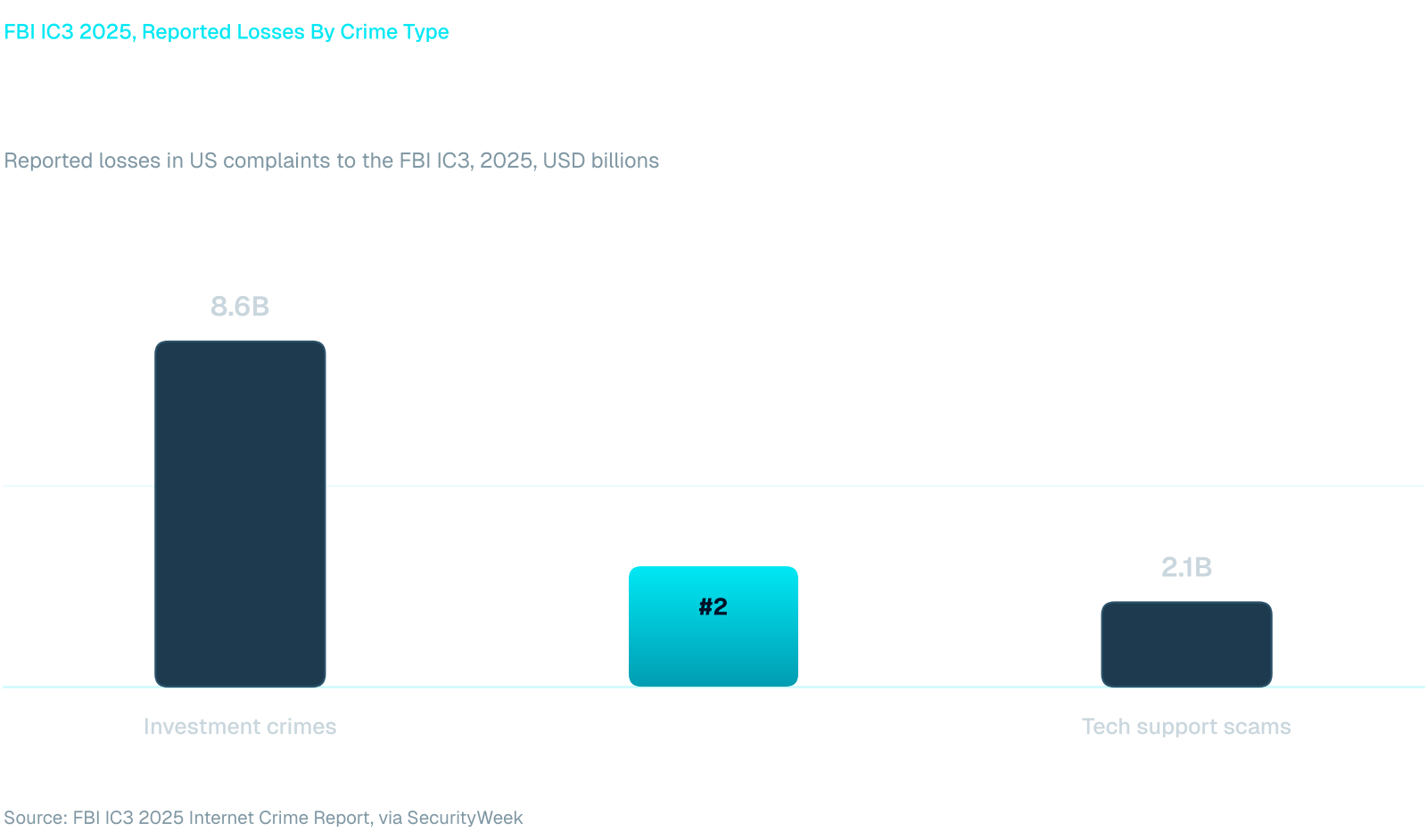
Put a dollar figure on a scenario your finance team recognizes. Business email compromise is the clearest, because the loss is a payment that left the account. The FBI's Internet Crime Complaint Center recorded $3 billion in business email compromise losses for 2025, second only to investment crimes at more than $8.6 billion and ahead of tech support scams at $2.1 billion. Those are US complaints, so use them to show scale and replace them with your own figures in the case itself.
Your own figures come from your incident log and near-misses: the payment-detail change that was caught on the second call, the credential entered on a fake sign-in page, the file pasted into an unapproved AI tool. Each one is a scenario with a frequency and a cost, and the cost side of the case has to match that level of detail.
Count the Full Cost of the Program
The cost side is where business cases lose credibility, because it is usually understated. The license is the easy line. Add the analyst hours spent planning and reviewing campaigns, the time employees spend in lessons and simulations, help desk volume after a simulation, and the integration work with your directory and Microsoft Teams.
Employee time deserves its own line. It is often the largest item and the first one finance asks about. Short lessons placed inside the workday cost less than a monthly hour-long course, and a program with no campaign calendar returns analyst time. The Graybait phishing program is built for that: you connect the workforce, set guardrails, choose an objective and activate it, then the team steps in only when the system asks.
Build the Security Awareness Business Case
A security awareness business case is an argument in four steps, and a reviewer should be able to challenge each one. NIST SP 800-50 Rev. 1 includes suggested metrics and evaluation methods so a learning program can be improved over time, which gives you a neutral reference for the measurement step.
- Choose two or three loss scenarios from your own incident log, such as a payment-detail change, credential theft or data sent to an unapproved AI service.
- Give each scenario an annual likelihood and a cost range, using the method your risk team already uses. Where you have no data, use a range, not a point.
- Name the behaviors the program changes for that scenario: reporting a message, verifying a payment change, refusing a credential prompt.
- Estimate the share of exposure those behaviors address in a low case and a high case, and write the assumption next to each.
The result is a range of avoided loss set against a full cost, with every assumption visible. A CFO can disagree with one assumption and still accept the method, which is what you want.
Keep the ask separate from the reporting that follows approval. The measures you track belong in board KPIs, and their definitions are in security awareness metrics. This post covers the case that gets the budget approved.
Security Awareness Training ROI Without Made-Up Numbers
Return needs a figure for loss avoided, and that is the one figure nobody can observe. So show movement in the behaviors your scenarios depend on and let finance follow the link. Phishing training ROI is the clearest case. A falling click rate is welcome, but reporting rate and time to report show whether staff act as a detection layer, and phishing simulation metrics explains how to read them together.
Scope belongs in the case too. The same Verizon report, as covered by Help Net Security, found engagement rates for mobile-based phishing simulations 40% higher than for traditional email simulations. A program that tests only email describes part of the exposure, so include SMS and voice in both the scope and the cost.
Human risk management ROI is easier to defend when each employee has a risk score that moves. Odin scores each employee continuously, weights the score by role criticality and escalates automatically, so you can show finance that exposure sits in named roles and that spend follows it. When someone shows a risky behavior, just-in-time coaching responds at once inside Microsoft Teams, which shortens the gap between exposure and response and gives you a before-and-after to measure.
To make that comparison credible, phase the rollout by department. The group that starts later is your baseline, and the difference in reporting rate and repeat behavior after a quarter is evidence you can put in front of the board.
Take One Scenario to Your CFO
Back to the budget meeting. Bring one scenario, one cost range, one behavior measure and one review date. A smaller case that survives questions beats a large one that does not, and it earns the next year's conversation on better terms.
Then review it every quarter with the same measures. If reporting rate is up, time to report is down and repeat behavior is falling in the roles that carry the most exposure, the case renews itself. If it is not, you will know which assumption to change before finance asks.
Frequently Asked Questions
What is a good ROI figure for security awareness training?
There is no universal figure, and a number quoted without your own loss data will not hold up in a budget review. Build it from your scenarios: a range for avoided loss against the full program cost, with assumptions stated. Report the ratio as a range and revisit it each quarter.
How do you measure phishing training ROI?
Track reporting rate, time to report and repeat behavior next to click rate, by role and department. Then link each measure to a loss scenario, such as a payment-detail change. The return is the reduction in exposure those behaviors represent, shown as a range rather than a single figure.
What costs belong in the business case?
Include the license, analyst hours for planning and review, employee time in lessons and simulations, help desk volume after simulations, and integration work with your directory and Microsoft Teams. Leaving out employee time is the most common gap, and finance usually spots it first.
Can I use industry statistics in my business case?
Use them to show scale, such as the FBI's 2025 business email compromise losses or Verizon's finding on the human element, then replace them with your own incident and loss data. External figures come from other regions and populations, so they open the argument but should not carry it.
How often should the business case be reviewed?
Quarterly works for most teams. Use the same behavior measures each time so the trend is comparable, and update the loss scenarios whenever an incident or near-miss changes your view of likelihood or cost. A case that is reviewed on a schedule is easier to renew.

Human Risk Management Framework: Five Phases and Owners
A human risk management framework for CISOs: five phases, named owners, an operating cadence and governance rules to reduce human cyber risk.
A CISO who asks for a human risk management framework usually already owns the pieces: a phishing simulation tool, an annual training module and a dashboard of click rates. What is missing is how those pieces fit together, who answers for each one, and what happens on an ordinary Tuesday when nobody is watching. This guide is for CISOs and security leads in the UAE and GCC who are setting up or restructuring a human risk management program.
In short: A human risk management framework has five phases (baseline, policy, intervention, measurement, governance), one named owner per phase, and a fixed cadence from daily automation to an annual board review. Build the loop first, then tune each tool inside it.
A Human Risk Management Framework in Five Phases
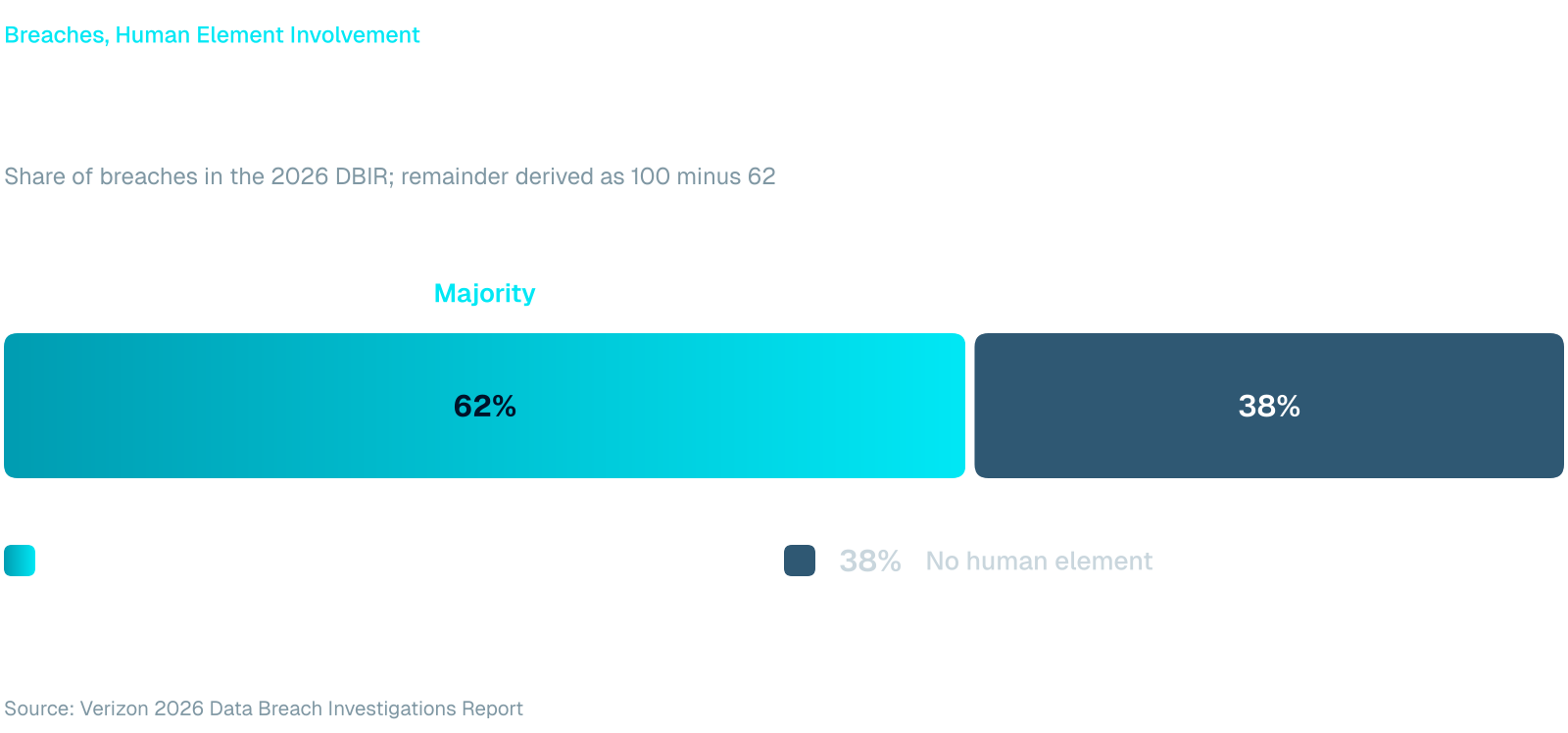
The Verizon Data Breach Investigations Report found the human element in 62% of breaches in its 2026 edition, up from 60% the year before. That share is why the program belongs to the CISO and not to a training calendar. NIST describes its SP 800-50 Rev. 1 learning program as a life cycle with ongoing, iterative improvement, and the five phases below follow the same loop.
Each phase answers one question and hands its output to the next.
- Baseline. Find where risk sits by role and department. The human risk assessment guide covers the method.
- Policy. Decide which signals trigger which response, and which responses need a person to approve them.
- Intervention. Deliver training, simulations and nudges to the person who needs them, when they need them.
- Measurement. Track risk movement, reporting behavior and repeat behavior. The human risk score post explains what goes into the number.
- Governance. Review results, approve changes and report upward.
The loop matters more than the order. Measurement feeds the baseline, so a score that stays high in finance for two quarters changes the next assignment and the next conversation with the department head. The comparison of human risk management and security awareness training makes the case for why this replaces a calendar of annual courses.
Who Owns Each Phase
A framework without owners turns into a shared inbox. Name one accountable person per phase and write the names into the program charter.
The CISO sponsors the program, owns governance and carries the numbers to the executive committee. A program owner in the security team runs the first four phases day to day. If you already have a security awareness lead, this is that role, widened from course completion to risk outcomes.
HR and department heads supply the role and joiner data that keeps the baseline current, and they agree what happens when a team stays high risk. IT and identity teams connect the directory, endpoint and identity events that feed the signals, and they own the controls behind any high-stakes action.
Legal or privacy reviews what you collect about employees and where it is stored. Fraus can be hosted on UAE or GCC servers or deployed fully on premise, which answers the residency question before it is asked.
Operating Cadence for the Program
A human risk management program depends on its rhythm. The aim is for routine work to run without anyone remembering it, so that people spend their time on exceptions.
- Continuous. Signals update each person's risk, and routine responses run through automation rules.
- Weekly. The program owner clears the escalation queue and any actions waiting for approval.
- Monthly. Review score movement by department, reporting rate and repeat behavior with team leads, using the metrics your program runs on.
- Quarterly. The CISO recalibrates role weighting, retires what is not working and refreshes policy attestation.
- Annually. Refresh the full baseline and take a board report.
Much of this can be scheduled. Fraus automation rules support weekly, monthly, quarterly and annual schedules for executive reports, policy re-attestation and risk score recalculation. Between reviews, training should not wait for a meeting: Zero-Touch Training responds the moment a person shows a risky behavior, inside Microsoft Teams.
Governance and Approval Gates
Governance is the easiest phase to skip, and it decides whether employees and auditors trust the program. Start with a one-page charter that says which signals are collected, who can see individual data, which actions run automatically and which need approval.
Approval gates deserve the most attention. Assigning a short lesson can run on its own. Anything that touches access or payments, such as step-up MFA or a finance approval hold, should wait for an analyst. Fraus lets agentic AI act in supervised or unsupervised mode, admin rules take priority, and every agentic action is logged for audit, so your internal audit team has a trail to review.
Then report in outcomes. A board rarely wants click rates; it wants to know whether risk in the most exposed roles is falling. The layout in security awareness KPIs for the board fits on one page.
Reduce Human Cyber Risk in 90 Days
A workable human risk management strategy for the first quarter is small. In weeks 1 to 3, name the owners, write the charter and connect the directory. In weeks 4 to 6, baseline the highest-impact roles first, such as finance, executive assistants and IT administrators, and weight them by role criticality in Odin before you widen to everyone.
In weeks 7 to 10, switch on automated responses for low-stakes actions and test each rule before you trust it. The risk-based training approach shows how assignments follow the score. In weeks 11 to 13, hold the first quarterly review and take the results to the executive committee.
Back to that ordinary Tuesday: with owners named, a cadence set and rules in place, nothing depends on someone remembering. This week, write the first page of the charter and put a name against each of the five phases.
Frequently Asked Questions
What is a human risk management framework?
It is the structure that turns separate tools into one program: phases for baseline, policy, intervention, measurement and governance, a named owner for each, and a cadence for reviews. It answers who decides what, when, and with which evidence, so that human risk is managed like any other risk.
Who should own a human risk management program?
The CISO sponsors it and owns governance. A program owner in the security team runs it day to day. HR, IT and department heads each own the inputs they control, such as role data, identity events and team follow-up. One accountable name per phase works better than a committee.
How often should the program be reviewed?
Routine work runs continuously through automation. The program owner reviews escalations weekly, team leads see score movement monthly, the CISO recalibrates quarterly, and the baseline and board report refresh annually. Fixed dates matter more than the exact interval, because a review that is never scheduled never happens.
How can a small team run this?
Automate the routine and keep people for exceptions. Automation rules handle low-stakes responses, and Graybait runs phishing simulation without campaigns to plan or launch. Setup takes four steps (connect the workforce, set guardrails, choose an objective, activate), and the team steps in only when the system asks.